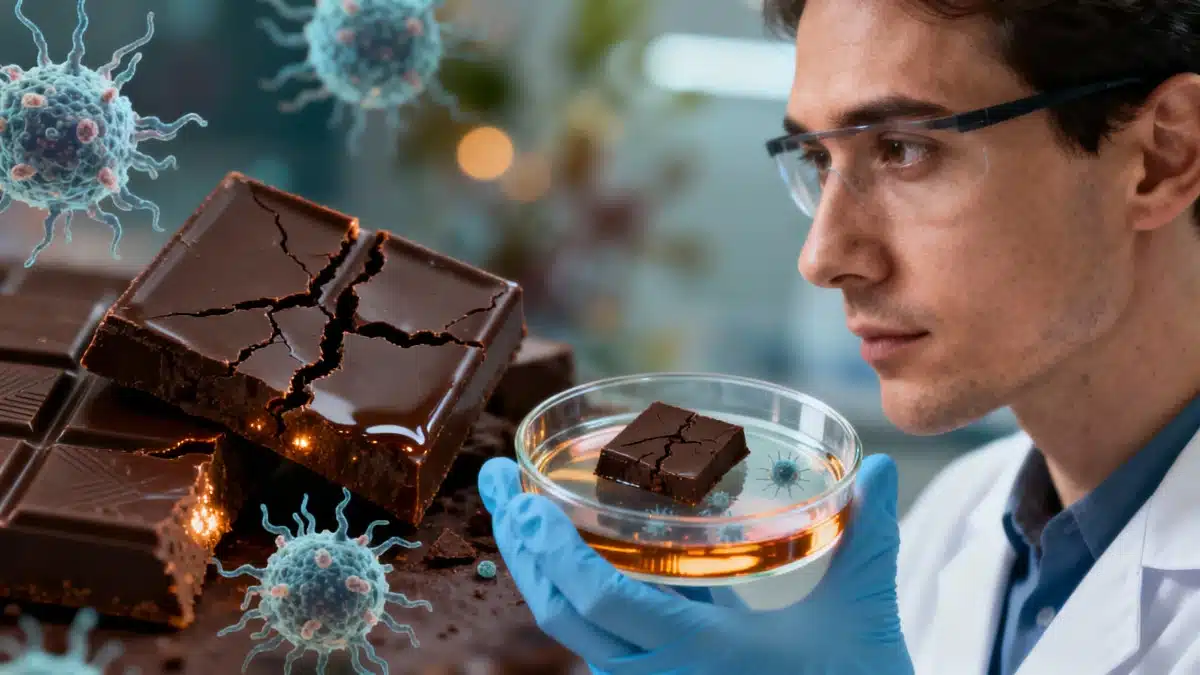
Could your sweet tooth actually be good for you? If you love savoring dark chocolate, put down the guilt (but keep the napkin). New research unveils a surprising connection between dark chocolate and a reduced risk of mouth cancer—a finding even scientists didn’t see coming.
The Study: Dark Chocolate’s Promising Protective Power
Great news for dessert-lovers everywhere! According to a recent study published in the journal Frontiers In Nutrition and reported by the Daily Mail, daily dark chocolate consumption may lower the risk of developing mouth cancer by nearly 25%. That’s right—chocolate as a form of self-care just got a scientific stamp of approval.
The researchers attribute this unexpected benefit to special compounds in cocoa, already recognized for their anti-cancer properties. These remarkable molecules seem to be doing more than tingling your taste buds; they’re stepping in as tiny defenders against harmful cellular changes inside your mouth.
The Details: Dissecting Diets and Risks
To arrive at these eyebrow-raising conclusions, scientists from Youjiang Medical University in China meticulously reviewed the eating habits of almost 10,000 participants. Of these, a third had been diagnosed with mouth cancer. It turns out, regular dietary appearances of dark chocolate—and, interestingly, sweet peppers—were linked to an inhibitory effect on the development of this cancer.
Let’s break that down:
- 10,000 participants examined for their diet
- One-third had mouth cancer
- Dark chocolate and sweet peppers both showed a promising anti-cancer effect
- No precise amount of chocolate specified; only regular presence in the diet was noted
So, while we can’t give you a magic daily gram count for nibbling, the broader message is simple: regularly enjoying dark chocolate might be doing more than brightening your mood.
The Bigger Picture: Mouth Cancer in France and Beyond
This discovery comes at a significant moment. In France, mouth cavity cancer is a growing concern. For instance, back in 2018, 4,677 new cases were recorded: 3,106 among men and 1,571 among women. Health authorities consistently emphasize that tobacco and alcohol use remain the leading risk factors for this type of cancer—so swapping cigarettes for squares of dark chocolate may not be a bad trade, all things considered.
To ground this reality, consider the case of Hollywood icon Michael Douglas. Diagnosed with stage 4 mouth cancer in 2010, he fought back with a determined combination of radiotherapy and chemotherapy. Today, he’s in remission, proving that the battle, while tough, can be won with tailored treatment.
More Than Just Sweet Talk: Past Research on Dark Chocolate
The cancer-fighting potential isn’t dark chocolate’s first brush with good press. Previous studies have spotlighted its health benefits, too. For instance, research by Harvard University, published in the British Medical Journal, found that regular dark chocolate consumption could reduce the risk of developing type 2 diabetes by around 20%. Milk chocolate, the sweeter, more processed cousin, didn’t fare as well—it was associated with increased weight gain.
In summary, the protective halo seems to shine brightest for dark chocolate. The science so far points to potential perks beyond simple pleasure, especially when it replaces more questionable snacks or lifestyle choices.
Final Words: Should You Stock Up on Dark Chocolate?
While this isn’t an invite to raid the confectionery aisle with abandon, incorporating dark chocolate into a balanced diet certainly looks less sinful. Still, moderation remains key (yes, sadly, even with promising research!). And remember: quitting tobacco and limiting alcohol are still the heavyweight champions in cancer prevention.
So next time you savor a square of dark chocolate, cheer up—not only for your taste buds, but possibly your future health, too. Who knew self-indulgence could have a scientific silver lining?

John is a curious mind who loves to write about diverse topics. Passionate about sharing his thoughts and perspectives, he enjoys sparking conversations and encouraging discovery. For him, every subject is an invitation to discuss and learn.